
.png)
.png)
.png)
_2026122-125305.png)
_2026122-125305.png)

_2026122-125305.png)
_2026122-125305.png)
_2026122-125305.png)










Sustaining an injury is difficult and frustrating for any athlete, and for many it is tempting to overindulge in unsuitable foods that may not be ideal for rapid recovery, Wendy Martinson OBE explains.
Eating well during the rehabilitation period is one of the positive things athletes can do to facilitate the healing process and enable them to get back to training as soon as possible.
The healing process
The length of time taken for an injury to heal will depend on the severity and type of injury. The repair pathway is similar, regardless of the aetiology of the injury and involves the immune system orchestrating a complex network of immune cells that peak at different time during the process. This helps to distinguish the four different stages, which are haemostasis, inflammation, proliferation and remodelling.
Haemostasis and inflammation is the body's initial response to the acute injury and during this phase the aim is to control blood loss and cellular damage, remove debris and control or eliminate invading bacteria. This phase starts from the time of injury, can last for 3-4 days and is marked by vasoconstriction to stop bleeding, platelet accumulation to form a clot, and leukocyte migration to engulf bacteria and debris to clean the wound site. The injury may appear warm, red and swollen during this phase.
During the proliferation phase new blood vessels are formed, fibroblasts produce collagen, the wound edges pull together (contracture) and the surface of the wound is covered with epithelial tissue. This phase can start around day 3 and can last for 2-3 weeks.
Finally, the remodeling phase can start 2-3 weeks after injury and last up to 2 years, during which time collagen and other proteins become more organized in structure and type III collagen is replaced with type I which is stronger. The scar tissue, which develops, is 70-80% as strong as the original tissue.1, 2
How can nutrition help?
There are many nutrients involved in the healing process and a deficiency can compromise the speed of recovery. Some of the key nutrients involved include protein, vitamin C, A, B complex, E, K, selenium, zinc, iron and copper. Calcium and vitamin D also play a significant role in the healing of bone tissue.
Sufficient energy is also required from carbohydrate and fat during injury to support the healing metabolic processes.
Energy intake
The amount of energy needed following injury depends on the extent of the injury and how much it affects normal activity levels. Acute injury including post-surgical procedures and inflammation will increase metabolic stress and so energy requirements are likely to be higher in the early phase of recovery. However this increase will not be equivalent to the decrease in energy expenditure as a result of inactivity. So overall it will mean a decrease in usual energy intake for athletes in order to prevent excessive weight gain over the period of rehabilitation.
Protein
Protein deficiency can contribute towards poor wound healing by prolonging the inflammatory process, impairing collagen synthesis and inhibiting wound remodeling.3, 4 Immobility following injury can also lead to a degree of muscle atrophy. Athletes need to ensure they consume sufficient energy and protein post injury to help optimise healing and to limit excessive losses in muscle mass. Requirements for protein are thought to be in the region of 1.6-2.5g/kg body weight.5
Protein with a high leucine content (2.5-3g) such as lean meat, fish, poultry, eggs, dairy foods and whey protein will help enhance muscle protein synthesis6, 5 and consuming 0.25-0.3g protein/kg per meal every 3-4 hours will maximise the response.7, 8 Including a bedtime slow-release protein such as milk or casein may also be beneficial.9 Supplements such as HMB and creatine may also be considered to minimise muscle protein loss.5
Omega 3 fats
There may be several benefits to increasing intake of omega 3 fats during injury due to the impact of these fats on the immune and inflammatory response10 and also on the muscle protein synthesis pathway.11 Good food sources for athletes to include in their diet are oily fish, linseeds, walnuts and chia seeds. However an omega 3 supplement may be required as it can be difficult to obtain the desired amount from food alone.
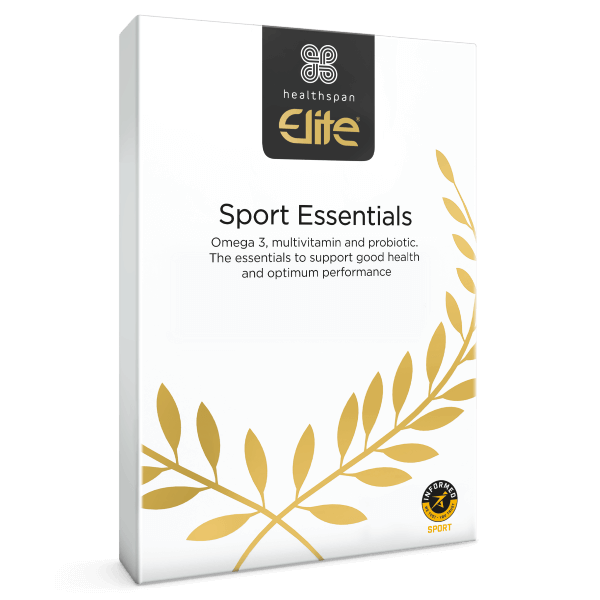
Elite Sport Essentials
Three essential supplements to support good nutrition and optimum performance
- Multivitamin, omega 3 and probiotic
- Convenient daily tear strips
- Supports energy levels, recovery and digestive health
Vitamin C
Vitamin C is essential for wound healing, as it is a co-factor in the hydroxylation of proline and lysine during the formation of collagen. It also enhances leukocyte function and acts as an antioxidant.12 Deficiency of vitamin C can cause delayed wound healing due to the capillaries and connective tissue at the wound site being too fragile and so new scar tissue cannot adequately be formed. At intakes of approximately 200mg per day tissue saturation is reached and to achieve this vitamin C-rich foods should be consumed each day.
Vitamin C is found in virtually all fruit and vegetables but especially good sources are sweet peppers, brussels sprouts, broccoli, watercress, tomatoes, guava, blackcurrants, kiwi, citrus fruits, strawberries, lychees and mango. Fresh fruit and vegetables need to be eaten within a few days of buying as the vitamin C content gradually diminishes. A vitamin C supplement may be beneficial if dietary intake is not optimal.
Zinc
Zinc plays a role in all stages of wound healing and deficiency is associated with reduced epithelialization, decreased scar strength and collagen production. If zinc status is good, supplementing with additional zinc does not accelerate wound healing. However, in those that are deficient, supplementing with zinc may enhance the wound healing process.2 Athletes recovering from injury should include rich sources of zinc in their diet including lean meat, fish, shellfish, pulses, seeds, nuts and wholegrains.
Conclusion
It is clear that nutrition has a key role to play in the recovery from acute and chronic injury. It is important that athletes receive nutrition support during this stressful and difficult time to help them back to training as soon as possible.